Bedding · Materials Guide
Organic Dunlop Latex: How to Compare Layers, Firmness, and Certifications
Natural materials may set the scene, but the details make the difference. Learn how to read an organic Dunlop latex mattress’s construction, understand firmness beyond a single label, and evaluate certifications with a discerning eye.
A mattress can be described in a handful of words—organic, natural, firm, responsive—and still leave the important questions unanswered. What is actually inside it? How do its layers work together? Which part of the mattress has been certified, and to what standard? And will the feel suit the person who sleeps on it night after night?
These questions matter especially when comparing organic Dunlop latex. The material has a distinctive, buoyant quality, but “latex” is not a complete description of how a mattress will feel. Layer order, thickness, firmness, cover construction, and the sleeper’s own body and preferred position all contribute to the experience. A thoughtful comparison looks past the headline and examines the whole design.
That approach also helps separate meaningful documentation from broad marketing language. Terms such as natural and organic can suggest a material story, but they do not automatically tell you how much latex is used, whether it is Dunlop or Talalay, or which components have been independently certified. The most useful choice is not necessarily the one with the longest list of appealing words. It is the one whose materials and construction are clearly explained—and whose feel aligns with your needs.
What makes Dunlop latex distinctive?
Dunlop latex is made by processing liquid latex into a foam. In broad terms, the latex mixture is placed into a mold, heated to set, and then washed and dried. The resulting material is resilient and springy, with a more unified, substantial feel than the slow, sinking sensation many people associate with memory foam. It compresses under pressure and responds as the sleeper moves, rather than taking a long time to recover its shape.
That description is a starting point, not a guarantee of comfort. Formulas, density, firmness, layer dimensions, and mattress design vary. Two mattresses that both use Dunlop latex may feel notably different, just as two garments made from the same fiber can have entirely different drape and structure.
Dunlop is often compared with Talalay latex, another process used to make latex foam. The finished materials can differ in feel and construction, but neither label alone determines whether a mattress is suitable. The layer’s firmness, its position in the mattress, and the other materials around it remain essential. A useful comparison asks what each layer does rather than treating a manufacturing method as a shortcut to a verdict.
Latex is also often described as responsive. In practical terms, that means it tends to push back as it compresses, which can make changing position feel less effortful than on a deeply conforming surface. Some sleepers enjoy that buoyant quality; others prefer a more enveloping sensation. Neither response is inherently better. Comfort is personal, and the same construction may feel different depending on body weight, sleep position, and individual sensitivity to pressure.
Read the mattress as a set of layers
A layered mattress should be considered from top to bottom, not simply by its overall height. The top layer is the first point of contact. It can influence how quickly the surface yields around the shoulders, hips, and other pressure points. The layers beneath it add further compression and support, shaping how the mattress responds as the sleeper settles in.
In a three-layer latex mattress, for example, a soft top layer over medium and firm layers may create a different first impression from a medium layer above two firmer ones. Reversing or rearranging layers, where a design permits it, can change the overall feel without changing the materials. Layer order therefore deserves a place in any comparison checklist.
Ask whether the mattress has one continuous core or separate, replaceable components. If it is layered, find out the thickness and firmness of each layer, whether layers can be rearranged or exchanged, and which materials sit between the latex and the sleeper. A cover quilted with wool, for instance, adds another component to the surface experience. The mattress’s feel is the result of the whole assembly—not the latex alone.
Construction details can also affect how practical a design is over time. A zippered cover may make the layers accessible, while a non-removable cover may not. If the manufacturer offers layer exchanges or customization, clarify the terms, timing, and any applicable costs. A configuration that can be adjusted may be appealing, but flexibility is most useful when you understand what can actually be changed and under what conditions.
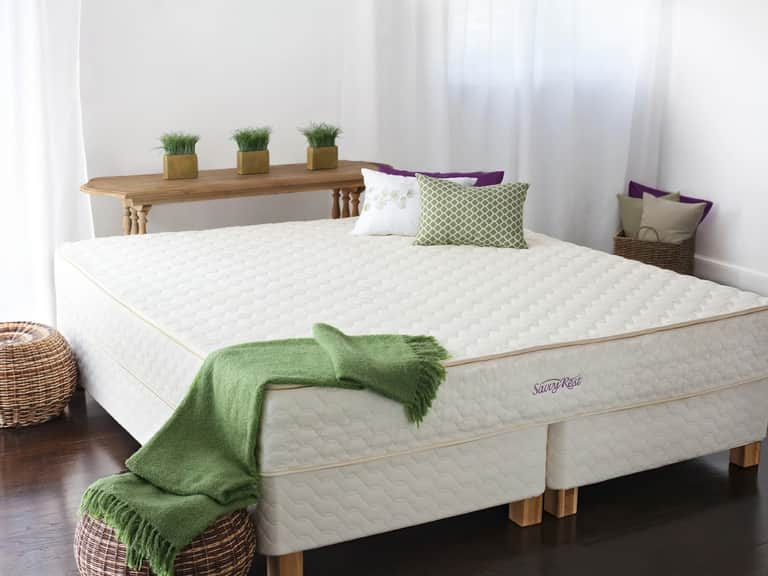
The Savvy Rest Serenity Latex Mattress offers one example of a configurable three-layer design. Its listed construction includes soft, medium, or firm Dunlop or Talalay latex layers within an organic cotton casing quilted with organic wool. The product information describes the pricing as applying to an all-Dunlop configuration and notes that Queen and King sizes can be customized by side. This is a construction example, not a universal template: when assessing any mattress, confirm the selected materials, precise layer arrangement, and available options for the size you are considering.
Firmness is a conversation, not a number
Firmness labels are useful shorthand, but they are not a standardized promise of how a mattress will feel to every sleeper. One company’s “medium” may feel closer to another company’s “medium-firm.” Even within a single design, the same surface can feel softer to a heavier sleeper because it compresses more deeply, while a lighter sleeper may experience the same latex layer as firmer.
This is why a label should be read as a clue rather than a conclusion. If technical information is available, look for a clear description of each layer’s firmness and how the manufacturer defines its scale. If the scale is not explained, ask for a comparison in everyday terms and, where possible, test the mattress or review its comfort and exchange policies before making a decision.
Sleep position can help frame the discussion. Side sleepers commonly look for a surface that allows the shoulders and hips to settle comfortably while maintaining a supported feel elsewhere. Back sleepers may prioritize an even, balanced sensation through the torso and hips. Stomach sleepers often pay particular attention to whether the midsection feels adequately supported. These are starting points rather than rules: body shape, weight distribution, mobility, and personal comfort all influence what feels right.
For people who change positions, a responsive surface may be appealing because it can feel easier to move across than a material that cradles the body more deeply. Couples may need to account for different preferences, too. Some layered mattresses allow each side to be configured separately in larger sizes. That can make a shared bed more adaptable, although the exact options—and whether the split creates any noticeable difference at the center—should be confirmed before purchase.
When evaluating firmness, consider how the mattress feels in your usual position after giving it enough time to settle. Notice whether pressure builds at the shoulders or hips, whether you feel comfortably supported, and whether turning over feels natural. A quick sit on the edge or a brief lie-down in an unfamiliar position offers limited information. If a trial or layer-exchange policy is available, read the conditions closely rather than assuming an adjustment will be automatic or unlimited.
How body weight and support interact
Weight changes how deeply a sleeper compresses a mattress, which can influence both perceived firmness and pressure relief. A softer layer may compress substantially for one person but only slightly for another. That does not mean that a particular body weight dictates a single correct firmness. It means the mattress should be judged in context: a sleeper’s proportions, usual posture, and comfort preferences are part of the equation.
Support and firmness are related, but they are not interchangeable terms. Firmness usually describes the initial sensation at the surface. Support refers more broadly to how the mattress holds the body in a comfortable position. A surface can feel plush while still providing underlying support, or feel firm without delivering a comfortable fit for a particular sleeper. When a product description uses these words, look for an explanation of the actual layers and their roles.
It may help to keep a short sleep note during a trial period. Record your usual position, any areas that feel pressured, how easy it is to change position, and whether the sensation improves or remains consistent over time. This is more informative than relying on a single morning’s impression or a firmness word that has no shared industry scale.
What organic certifications can—and cannot—tell you
Certifications can make a complex supply chain easier to assess, but they are meaningful only when you know what they apply to. A certificate may relate to raw materials, processing, a finished textile, or a defined product. It does not necessarily cover every component in a mattress. Ask which parts are certified and whether the documentation refers to the specific model and configuration being sold.
For latex mattresses, the Global Organic Latex Standard (GOLS) is a certification to look for when evaluating claims about organic latex. The USDA organic program may also appear in relation to agricultural raw materials or supply-chain claims. These standards have distinct scopes; one should not be treated as a substitute for the other. Read the manufacturer’s explanation carefully and request supporting details if the wording is unclear.
For textile components, certifications may apply to materials such as cotton or wool, or to processing requirements for textile products. A certified organic cotton cover does not by itself establish that the latex core is certified organic. Likewise, an organic latex certification does not automatically certify the cover, wool, thread, or every other material in the mattress. A transparent description identifies the component, the standard, and the scope of the claim.
It is also worth distinguishing certification from general language. “Natural latex,” “eco-friendly,” and “chemical-free” can sound reassuring, but each phrase may be used broadly unless it is connected to a defined standard or supported by specific documentation. No mattress is literally free of chemicals; materials are made of chemical substances, and the useful question is what they are, how they are processed, and what evidence supports the claims being made.
Certification is not a promise of a particular comfort level, mattress lifespan, or health outcome. Its value is in providing a framework for verifying defined material and processing claims. Comfort, durability, care requirements, and suitability for a sleeper still need to be evaluated separately.
A practical checklist for comparing descriptions
Product pages often use elegant shorthand, but the most useful details are concrete. Before comparing two organic Dunlop latex options, look for answers to these questions:
- What is the latex type? Confirm whether the mattress uses Dunlop, Talalay, or a combination.
- How many layers are there? Look for a layer-by-layer description rather than a single general statement about latex.
- What are the dimensions of each layer? Thickness helps clarify how the design is assembled and how much material is used.
- How is firmness described? Find out whether soft, medium, and firm refer to each layer, the finished mattress, or both.
- Can the layers be rearranged or exchanged? Check the policy and any limits, fees, or deadlines.
- What is in the cover? Consider cotton, wool, quilting, and any other materials that contribute to the surface feel.
- Which components are certified? Identify the named standard and the exact material or product it covers.
- Where are the materials sourced and the mattress assembled? Treat sourcing and manufacturing as separate questions.
- What care is required? Check whether the cover is removable, washable, or intended for spot cleaning only.
- What are the trial, warranty, and delivery terms? Read the conditions rather than relying on a headline summary.
Clear answers make comparison easier, but a longer specification sheet is not automatically a better one. The aim is to understand the choices in front of you: the materials, the order of the layers, the meaning of the firmness labels, and the documentation behind organic claims.
Care, covers, and the life of the mattress
Latex is only one part of the ownership experience. A cover can influence the first impression of the mattress and determine how the surface is protected and maintained. Wool quilting, cotton fabric, and other cover materials have different characteristics and care instructions, so read the manufacturer’s guidance before removing or cleaning anything.
Even when a cover has a zipper, that does not necessarily mean it is machine washable. Some covers are designed for spot cleaning only, and removing them may affect the warranty or the way the mattress is assembled. Use a well-fitting protector if appropriate for your needs, and confirm that its materials will not substantially change the surface feel you chose.
Also check the foundation requirements. A mattress needs a suitable base to function as intended, and a design that is compatible with an adjustable base may not be compatible with every other support system. Confirm spacing, weight, and setup guidance with the manufacturer or retailer before delivery. These practical details are less romantic than a material description, but they are part of making a considered purchase.
Common assumptions worth reconsidering
“Organic means automatically more comfortable.” Certification speaks to defined material or processing criteria, not to personal fit. A carefully certified mattress may still feel too firm, too soft, or otherwise unsuitable for a particular sleeper.
“Natural latex always feels the same.” Latex type, firmness, layer thickness, arrangement, quilting, and cover fabric can all shape the experience. The material name alone cannot describe the whole mattress.
“Firmer is always more supportive.” A harder surface is not necessarily a better match. Comfort depends on how the mattress meets the body and how its layers work together, not on pursuing the highest firmness label.
“One certificate covers everything.” Certifications have defined scopes. Verify whether they apply to the latex, textiles, processing, or finished product rather than assuming the entire mattress is covered by a single claim.
“A mattress that feels good in the showroom will feel identical at home.” A brief test is useful, but it cannot reproduce a full night of sleep. Trial and exchange terms matter, especially when firmness and layer configuration are central to the decision.
A considered choice begins with better questions
Organic Dunlop latex can be an appealing option for sleepers who value a responsive feel and want to understand the materials inside their mattress. The most discerning approach is to treat every claim as an invitation to look closer. Compare layer order and firmness, consider how your sleep position and body weight affect the feel, and read certifications by their scope rather than by their name alone.
Start with the experience you want from the bed, then test that preference against the construction. Do you like a buoyant surface or a more enveloping one? Do you need a configuration that accommodates two different sleepers? Are adjustable layers genuinely useful to you, and are the exchange terms clear? Does the manufacturer identify which materials are certified and provide enough detail to understand the claim?
When the answers are specific, a mattress becomes easier to evaluate without leaning on sweeping promises. The best choice is not simply the most organic-sounding, the firmest, or the most elaborate. It is a clearly described sleep surface whose materials you can verify, whose construction makes sense to you, and whose feel fits the rhythms of your own rest.
The essentials at a glance
- Compare the full layer arrangement, not just the mattress’s latex label.
- Treat firmness terms as relative descriptions; body weight and sleep position influence how a mattress feels.
- Ask which components are certified and what each certification covers.
- Check cover materials, care instructions, layer-exchange terms, and the required foundation.
- Use product details and policies to assess fit; certifications do not predict comfort.