Bedding · Nursery essentials
What to Check in a Naturepedic Organic Crib Sleep Surface
A crib mattress is a quiet purchase with consequential details. Beyond the words “organic” and “breathable,” caregivers should understand what a sleep surface is made of, how it fits the crib, which side is intended for each stage, and how it can be cleaned. This considered checklist offers a practical way to assess Naturepedic organic crib mattress options—and to keep safe-sleep fundamentals in view while comparing them.
Published October 6, 2026
Begin with the sleep space, not the label
Organic materials can be an important part of a family’s decision, but the label alone cannot tell you whether a mattress is suitable for your particular crib or straightforward to care for. A useful comparison starts with the whole construction: the surface fabric, filling, support core, waterproof barrier, seams, and any separate pad or cover included in the design. Then consider how those parts work together in everyday use.
For infants, the central safety principles are consistent: use a firm, flat, non-inclined sleep surface designed for the crib, covered by a fitted sheet, and keep the sleep space free of soft objects and loose bedding. Always follow current guidance from your pediatrician and relevant public-health authorities, along with the crib and mattress manufacturers’ instructions. A mattress’s material story does not replace safe-sleep practices.
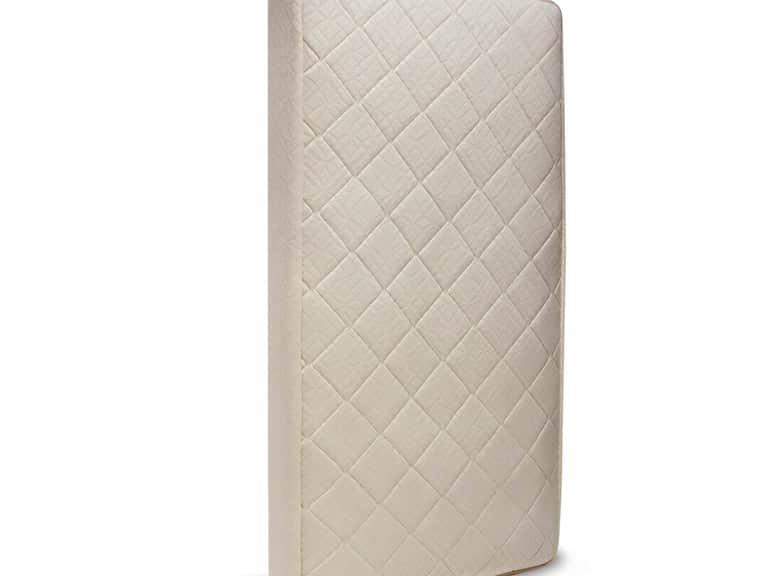
Naturepedic’s Ultra Breathable 2-Stage Organic Crib Mattress, for example, is described as a two-part sleep surface: a firm, flat mattress with a breathable mattress pad on top. Its listing also describes a waterproof outer surface and a two-stage design. These details make it especially important to read the product instructions carefully: understand which components belong together, how they should be fitted, and what the manufacturer says about each side and stage.
1. Read the materials list component by component
“Organic crib mattress” is a broad phrase, not a complete materials specification. Look for an itemized description of the mattress’s cover, inner materials, waterproofing, fire barrier, and any removable or breathable layer. If information is unclear, consult the manufacturer’s current product documentation rather than relying on a short retailer summary.
In the available description for the Naturepedic Ultra Breathable 2-Stage model, the core is described as organic cotton, and the waterproof surface as food-grade polyethylene. The listing says the cotton is GOTS-certified and that the product contains no wool, latex, or soy. It also describes a naturally derived fire protection system. These are product-specific statements, not assumptions that should be applied to every Naturepedic model or every organic crib mattress.
As you compare options, ask what “organic” refers to. It may describe a particular fiber or ingredient, rather than every component in the finished mattress. Certification names matter, too: note which material is certified, which organization issued the certification, and whether the claim applies to the finished product or a component. A clear explanation helps families assess what is present without mistaking one certification for a guarantee about every aspect of a product.
Material transparency is useful even when a family has no particular sensitivity. It helps caregivers understand the design, compare like with like, and make a choice that reflects their priorities—whether those include cotton, a waterproof surface, avoiding specific fibers, or knowing the origin of a component. Be wary of broad, unqualified language that offers no way to identify what the claim covers.
2. Understand what “breathable” describes
Breathability is a construction feature, not a substitute for a safe sleep setup. A product may use the word to describe airflow through a pad, a cover, or a particular layer; the term does not mean that an infant can safely sleep in any position or with additional bedding. Review exactly which part is described as breathable and whether the pad is intended to remain on the mattress during use.
For the Ultra Breathable 2-Stage model, the product description says a breathable mattress pad sits above a firm, flat mattress and is intended to support air circulation. It also describes a waterproof outer surface that can be wiped clean. When evaluating this arrangement, confirm how the pad attaches, whether it is designed for the specific mattress, and how the manufacturer instructs caregivers to put it on. Avoid substituting a different topper, pad, or soft layer unless the manufacturer and your child’s healthcare professional confirm it is appropriate.
More layers do not automatically mean greater comfort or safety. A crib sleep surface should be used as designed, with only the fitted sheet and components specified by its maker. Decorative quilts, pillows, loose blankets, positioners, and other soft items should not be added to an infant’s sleep space. If you have questions about a product feature or a child’s individual needs, seek advice from a qualified healthcare professional rather than trying to modify the sleep surface.
3. Treat crib fit as a first-order check
A beautifully made mattress is not the right choice if it does not fit the crib as intended. Check the crib’s manual for the mattress dimensions it accepts, then compare those requirements with the mattress’s stated measurements. Standard-size cribs and mattresses are designed to work together, but caregivers should verify the specific crib and mattress rather than relying on the word “standard” alone.
The Naturepedic model listing gives approximate dimensions of 27¼ by 51⅝ inches and a height of 6 inches. Use the current manufacturer specification as your reference, since product details can change. If the mattress seems bowed, does not lie flat, or leaves gaps at the edges, stop and consult both manufacturers before using it. The mattress should sit securely in the crib, with no unsafe spaces between the mattress and the crib sides.
Fit can be affected by more than length and width. Check how the crib’s support base is positioned, whether the mattress is fully supported, and whether the mattress cover or pad changes the way it sits. Follow the crib manual when adjusting mattress height as a baby grows and becomes more mobile. Do not improvise with extra padding to compensate for a mismatch.
Before the first use, inspect the mattress and its components for damage, loose seams, or parts that do not attach as described. Recheck the fit when moving the mattress, changing its orientation, or assembling the crib in a different setting. A quick review is especially worthwhile after delivery, because the product should be allowed to settle or assembled only as its instructions specify.
4. Decode a two-stage design with care
A two-stage crib mattress is intended to serve different developmental stages, commonly with a firmer infant side and a different-feel toddler side. The details vary by model. Read the maker’s instructions to identify each side, learn when a change is appropriate, and understand whether the mattress must be turned over or reconfigured. Do not infer the correct side from appearance alone.
The Naturepedic listing describes a firm, supportive side for an infant and a plusher, cushion-firm side for a toddler. That description should be checked against the product’s current label and manual. Use the infant side as directed for infant sleep; do not flip a mattress simply because a baby has reached a particular age. Follow the manufacturer’s stated transition guidance and current safe-sleep recommendations, and ask your pediatrician if you are unsure how those instructions apply to your child.
It is also worth understanding whether the two-stage design refers to firmness on opposite sides of one mattress, a separate pad, or another construction detail. This distinction affects how you clean, rotate, store, and use the product. Keep any labels or instructions that identify the sides accessible; a clear marking can make the design easier for every caregiver in the household to follow.
5. Make cleaning part of the comparison
In a nursery, easy care is not a minor convenience. Ask which surfaces can be wiped, which components may be removed, and whether any part is machine washable. A waterproof layer can help protect the interior from spills and everyday mess, but waterproof does not mean maintenance-free. Follow the exact cleaning directions to preserve the materials and construction.
The product description for Naturepedic’s Ultra Breathable 2-Stage model says its seamless waterproof surface is easy to wipe clean. It also describes a separate breathable pad. Before buying, look for instructions on cleaning each part: the mattress surface, pad, seams, and any cover. Do not assume that the mattress or pad can be machine-washed, soaked, bleached, or dried with heat unless the care label explicitly permits it.
Care instructions should be practical for your household. Consider how quickly a surface can be cleaned, how it should dry, and whether replacement parts are available if a cover or pad becomes damaged. A mattress that is simple to maintain may make it easier to keep the sleep space clean, while an unclear cleaning routine can lead to guesswork. Keep the manual in a place where other caregivers can find it.
- Check whether cleaning directions differ for the mattress and the included pad.
- Use only the cleaning products and methods recommended by the manufacturer.
- Let surfaces dry as instructed before returning components to use.
- Replace or discontinue use of damaged parts according to the manufacturer’s guidance.
6. Consider weight, handling, and construction
Caregivers often change crib bedding in dim light or while managing a busy routine. Mattress weight and the way a pad fits can affect how manageable those ordinary tasks feel. The listed lightweight version of the Naturepedic Ultra Breathable model is described as weighing 12.5 pounds. Check the current specification for the precise version you are considering; options and construction details may differ.
Look closely at the support core and how the manufacturer describes its durability. The Naturepedic product information mentions 144 coils for the innerspring version and Wavesupport technology. These details can help explain construction, but they should not distract from the basic questions: Is the mattress designed for the crib? Is it firm and flat as required? Does it fit securely? Can you use and clean it exactly as instructed?
Construction claims are most helpful when presented specifically. For example, the description of a waterproof exterior tells you something different from the description of an interior support system. Separate these features in your notes so that a long list of technologies does not obscure the practical design. If the retailer’s listing and the manufacturer’s documentation differ, confirm which information applies to the model and version you plan to purchase.
7. Keep certifications and safety claims in perspective
Families who prefer organic crib mattresses may be drawn to certifications, ingredient disclosures, or statements about chemical avoidance. These can make comparisons more transparent, but they should be read precisely. Identify the named standard, the material it covers, and the scope of the claim. A certification for cotton, for instance, should not automatically be interpreted as certification of every finished component.
Likewise, phrases such as “non-toxic,” “hypoallergenic,” or “natural fire protection” need context. Look for a description of the actual material or method and the standards the manufacturer says the product meets. The Naturepedic listing describes a naturally derived fire barrier system and says the product meets federal and state flammability standards; verify current details in the manufacturer’s documentation. Do not treat marketing language as a substitute for a compliance statement or independent advice.
Product information can change as models are updated. Before ordering, check the current label, specifications, warranty, and care instructions, and save a copy of the details for future reference. If you have a specific concern about an ingredient or a child’s medical needs, discuss it with a healthcare professional and contact the manufacturer for precise information about the model in question.
A concise comparison checklist
Use this list when reviewing Naturepedic options or comparing any organic crib mattress. It is designed to make the decision clearer—not to replace the crib manual, product instructions, or safe-sleep guidance.
- Materials: Are the cover, fill, support core, waterproof layer, and fire barrier identified clearly?
- Organic claims: Which components are certified, and what standard or certification is named?
- Design: Is the surface firm and flat, and are all included layers described?
- Breathability: Which component is called breathable, and how is it intended to be used?
- Fit: Do the mattress dimensions match the crib manufacturer’s specifications, with no unsafe gaps?
- Stages: If it is two-sided, are the infant and toddler sides clearly identified, with transition guidance?
- Care: Are wipe-clean, washing, drying, and replacement instructions practical and explicit?
- Support: Is the mattress supported by the crib base as directed, and is its construction explained?
- Documentation: Can you access the current manual, warranty, and model-specific product information?
A considered choice for a calmer nursery
The best crib sleep surface is not necessarily the one with the longest list of features. It is the one that fits the crib correctly, is used as designed, gives caregivers a clear account of its materials, and can be maintained without guesswork. Organic content may be a meaningful preference, but it belongs alongside practical questions about firmness, fit, construction, and care.
Naturepedic’s Ultra Breathable 2-Stage Organic Crib Mattress is described as combining a firm, flat mattress with a breathable pad, a wipe-clean waterproof surface, and infant and toddler sides. Those features offer a useful starting point for comparison. Read the current specifications closely, confirm that the model matches your crib, and follow the product’s instructions and established safe-sleep recommendations from the first night onward.
When the details are clear, choosing a crib mattress becomes less about decoding labels and more about making an informed, confident decision. In the nursery, that kind of clarity is its own quiet luxury.